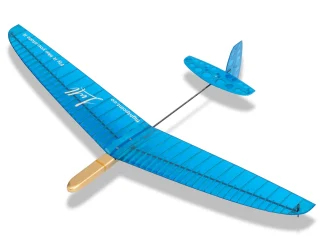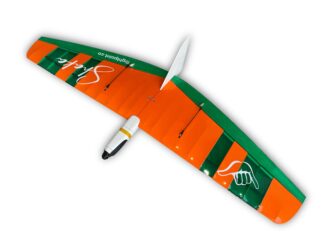
Chatting with F5J pilots, there is always a list of topics to discuss.
Models, powertrains, airfoils, flight modes, launch strategy, ballast, and ofc – the radios and radio links.
A few years back, ELRS was never there, since it was considered a purely drone or long-range protocol.
But the world of radio links has changed with the ELRS 3.0 release, when the team behind it introduced improvements for PWM receivers, which are the only option allowed for RC Glider competitions.
So, the “immortal” radio link has opened the barn door to the world of competitive flying.
Now, let’s explore the options you have for the ELRS F5J receiver 😉
Why You Need 7 Channels
A competition F5J sailplane isn’t just another electric glider – it’s a full-house aircraft.
The typical full-house wing has at least four control surfaces: two flaps and two ailerons, which require a dedicated PWM output to operate properly.
Add the two tail servos, then an ESC, and you end up with a 7ch receiver as a bare minimum.
This way, pilots can program radio transmitters to control all of these in symphony.
Use Y-leads Instead?
Some would argue you can use a Y-lead to combine, say, flap servos…
Technically, yes.
But that will come with some major drawbacks in terms of flight mode setup, so people rarely do that in competitions.
And that will be true for all full-house gliders.
ELRS Budget Anomalies
Unlike other radio links, ELRS hardware can be produced by multiple manufacturers.
That creates a variety of options.
So, let’s jump straight to the RC receiver options you have with ELRS.
The truth is – you can find a solution for any budget.
For instance, a 7-channel Rx can range from 8 USD for the cheapest option to 40+ USD for a top-end model.
Here are some of them:
BeyondFPV/Cyclone PWM 7Ch
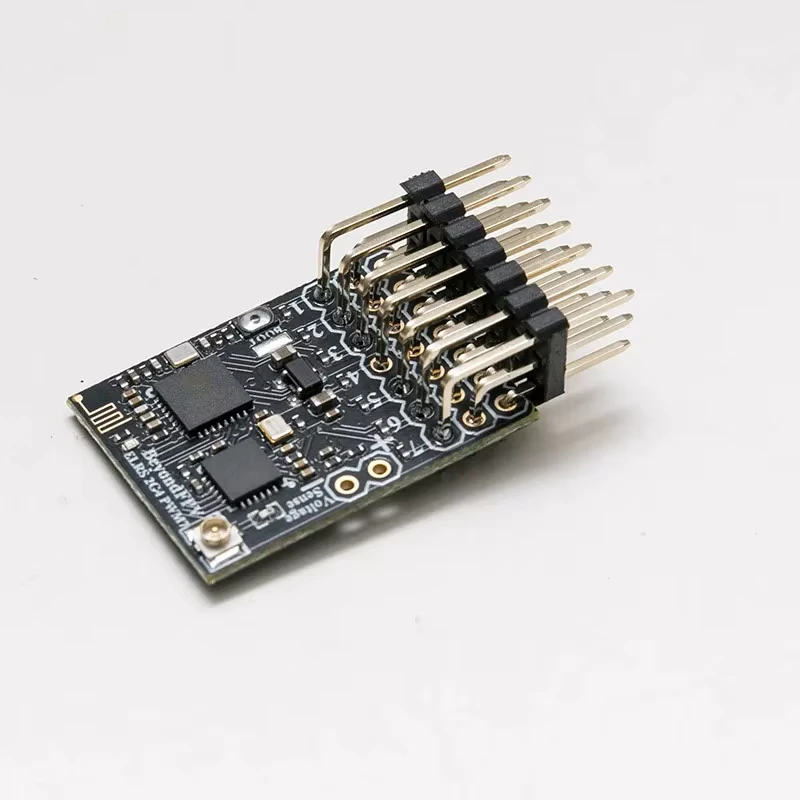
Price: ~8 USD
Frequency: 2.4Ghz
Telemetry: Yes
Voltage Rating: 3.7-8.4V
Voltage Sensing: >34V
Vario: No
Antenna Diversity: No
HelloRadio HR7E PWM 7Ch
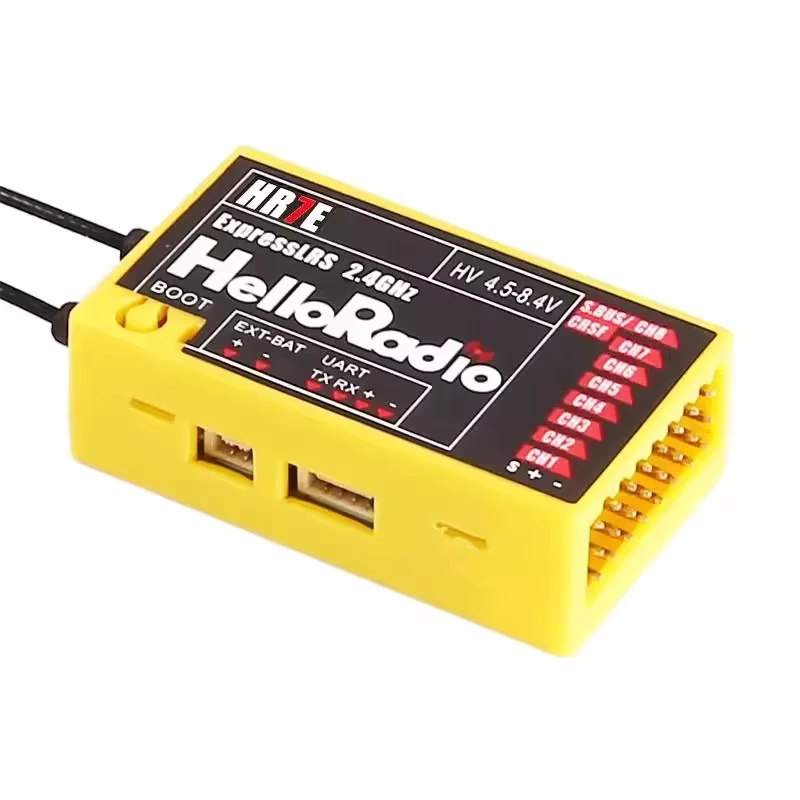
Price: ~15 USD
Frequency: 2.4Ghz
Telemetry: Yes
Voltage Rating: 3.7-8.4V
Voltage Sensing: >35V
Vario: No
Antenna Diversity: Yes
Radiomaster ER8G / ER8GV
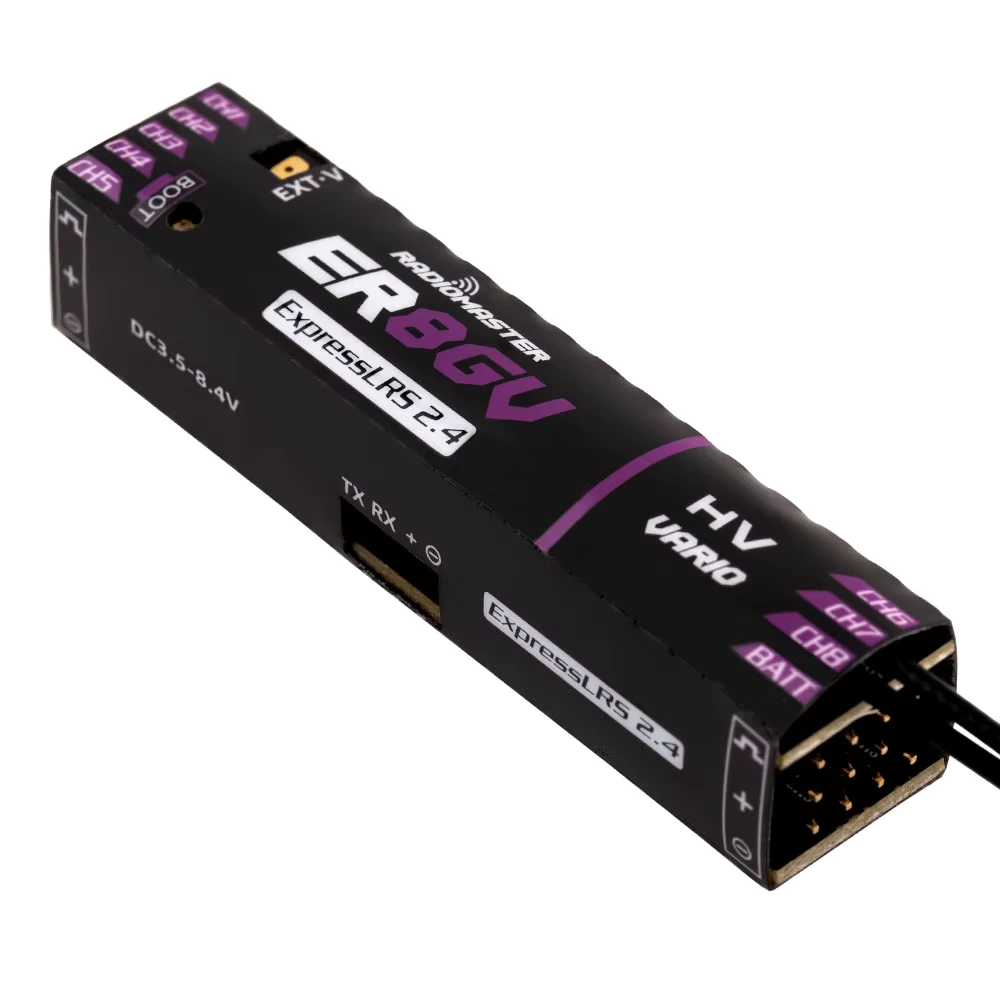
Price: ~40 USD
Frequency: 2.4Ghz
Telemetry: Yes
Voltage Rating: 3.7-8.4V
Voltage Sensing: >35V
Vario: No / Yes
Antenna Diversity: Yes
Now let’s break down what’s hiding behind these price tags.
Budget 7ch ELRS PWM Receiver
The lowest option, often, comes with some skeletons in the drawer.
The one above usually comes with only 6 channels working out of the box.
But no worries, it’s an easy fix that requires some knowledge, as all ELRS staff, tbh.
To get a sense of it, please see this video:
Note: the 7Ch JSON file mentioned in the video is linked in the description, so get it there.
As a result, you will get a perfectly functional 7Ch ELRS PWM receiver for your models, with a single antenna and telemetry.
If you feel “too old” for the above, no worries.
Just step up the price, and the things will become more user-friendly…
As much as it can be with all ExpressLRS topics 😉
HelloRadio and Radiomaster
The other two options are supposed to work straight out of the box.
Ofc, if you figure out the firmware versions, model match, binding, and packet rates…
Both feature antenna diversity with an optional vario sensor added by Radiomaster that may come in handy for training sessions.
Just don’t get addicted to the vario beeping – it’s not allowed in the competitions.
Is ELRS Worth The Struggle?
The short answer is – YES, absolutely!
ELRS is a long-range link, stable, extremely fast, precise, and flexible in its core, which comes with a lot to learn and figure…
But as soon as you get the sense of it – you will forget the Low RSSI warnings. If the signal can come through tens or hundreds of km, it will most probably reach your 4m ship in the line of sight through the bushes.
Just figure out how to set it up to see how it can improve your flying.
And if you’d like to learn more about the ELRS settings for RC gliders, leave a comment below.
Frequently Asked Questions
What are the best F5J receivers for competitive gliding?
There isn’t one universal winner. ELRS is an increasingly attractive option for new builds, while FrSky, Jeti and Futaba remain established choices with many years of use in competitive gliding. The best receiver is ultimately one that matches your transmitter, provides enough PWM outputs and delivers the reliability you need.
What is the ideal channel count for an F5J receiver?
For a conventional full-house F5J sailplane, seven PWM channels is the practical minimum: two ailerons, two flaps, rudder, elevator and ESC. Additional channels can be useful if you want to add other functions, but seven covers the essential controls.
How do I install an F5J receiver in a remote-control glider?
Install the receiver securely, keep the antenna arrangement appropriate for the receiver, connect each servo to its intended PWM channel, and verify channel direction and failsafe before flying. The receiver installation and setup section of the Maverick Assembly Guide provides a practical example of how this can be approached in a full-house F5K model.
How do I select a lightweight receiver for F5J competition?
Start with the functions you actually need rather than choosing a receiver based on features alone. A seven-channel PWM receiver without a built-in vario or other unnecessary sensors can be a very practical competition solution, particularly when every gram matters.
Which receiver protocol is best for F5J gliders?
ELRS, FrSky, Jeti and Futaba are all viable choices, and the transmitter you already use is an important factor. ELRS has a particularly strong case for new systems because of its RF performance, low cost and open ecosystem, while established proprietary systems remain excellent choices for pilots already invested in them.
What are the essential features of an F5J telemetry receiver?
The most useful features are reliable control, adequate PWM outputs and telemetry that helps monitor the health of the radio and power system. A variometer can be valuable during training, but real-time vario assistance should not be used during official F5J competition flights.
Where can I find reliable information about F5J-compatible receivers?
Start with information that explains the underlying receiver architecture rather than simply listing products. FlightPoint’s micro RC receiver guide covers PWM and serial receiver types, channel requirements and the major radio protocols, making it a useful reference when comparing systems.